
Downlighting vs. Uplighting: Choosing the Right Landscape Lighting for 2026
When the sun sets, your outdoor space shouldn’t disappear—it should transform.
The textures of your stonework, the silhouette of your trees, the subtle movement of ornamental grasses—these details deserve to be experienced long after daylight fades. The best landscape lighting doesn’t overwhelm your space. It doesn’t glare or distract. Instead, it quietly elevates everything around it.
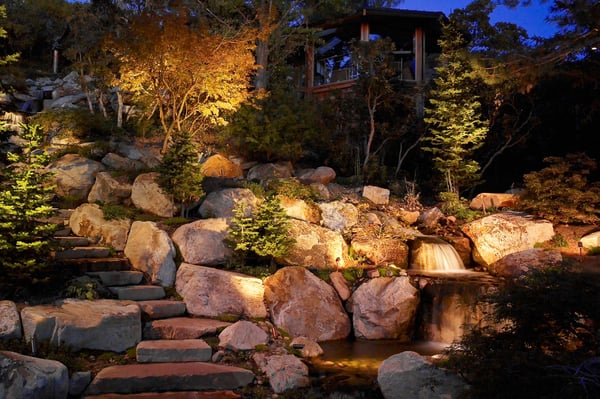
You don’t notice the fixtures. You feel the atmosphere.
In 2026, outdoor lighting design has evolved beyond simple visibility. Today’s homeowners want layered, energy-efficient, and design-forward lighting that enhances both lifestyle and property value. And at the heart of that transformation? A thoughtful balance of uplighting and downlighting.
Let’s break down how each works—and how combining them creates a truly elevated outdoor experience.
Uplighting: Creating Drama, Depth, and Architectural Impact
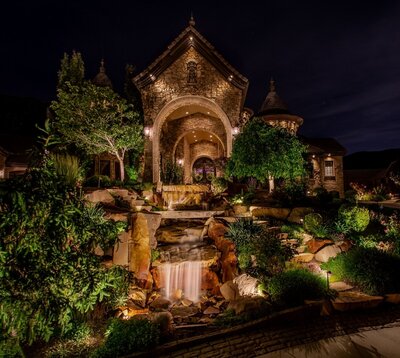
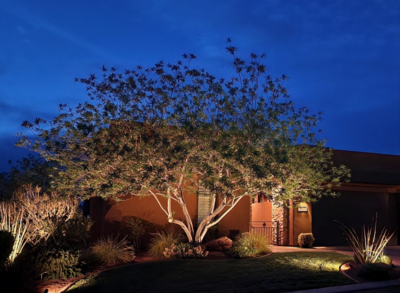
Uplighting is all about drawing the eye upward and adding dimension to your landscape. By placing fixtures at ground level and directing light toward vertical elements, you highlight texture, shape, and structure in a way that feels both dramatic and refined.
Think of uplighting as your tool for storytelling.
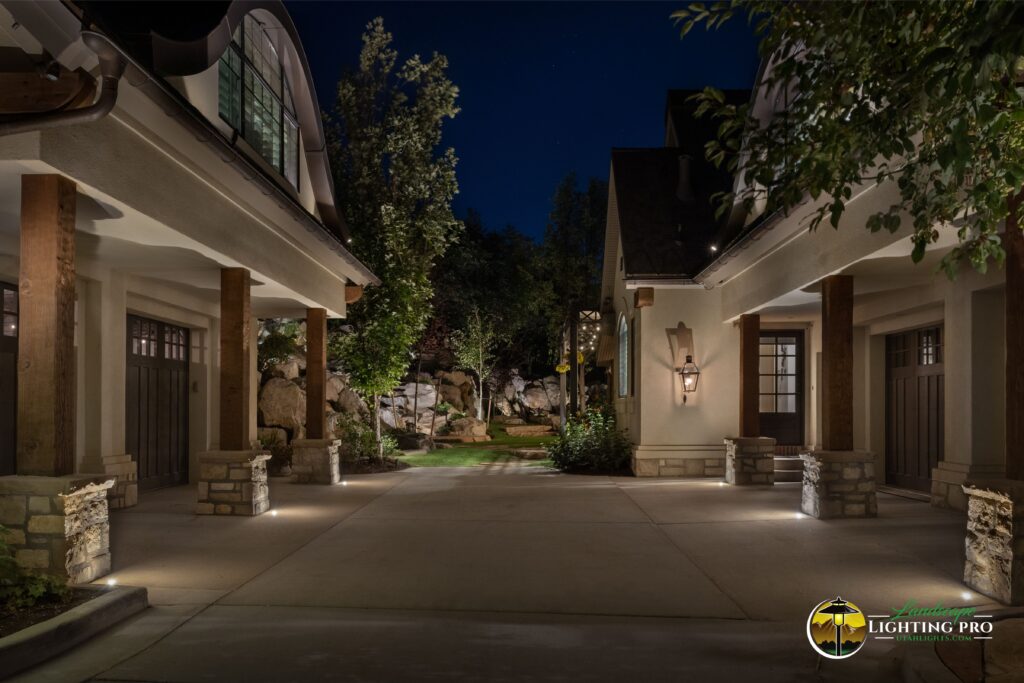
Common uplighting applications include:
- Mature trees and canopies
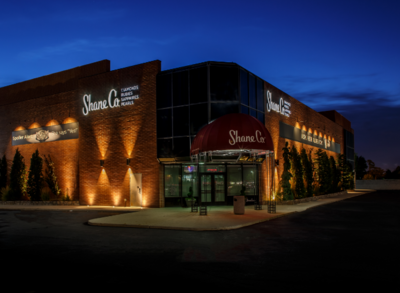
- Architectural columns and facades
- Stone walls and textured surfaces
- Pergolas and outdoor structures
When done well, uplighting adds depth and contrast, making your property feel larger and more dynamic at night.
Pro Tip: Start by identifying your focal points. What makes your property unique? A statement tree, a custom patio, or distinctive architecture—all are perfect candidates for uplighting.
Downlighting: Subtle, Functional, and Naturally Beautiful
If uplighting is about drama, downlighting is about realism.
Downlighting involves placing fixtures above—on structures, in trees, or under eaves—and directing light downward. The result mimics natural light sources like the moon, creating a soft, ambient glow that feels effortless and inviting.
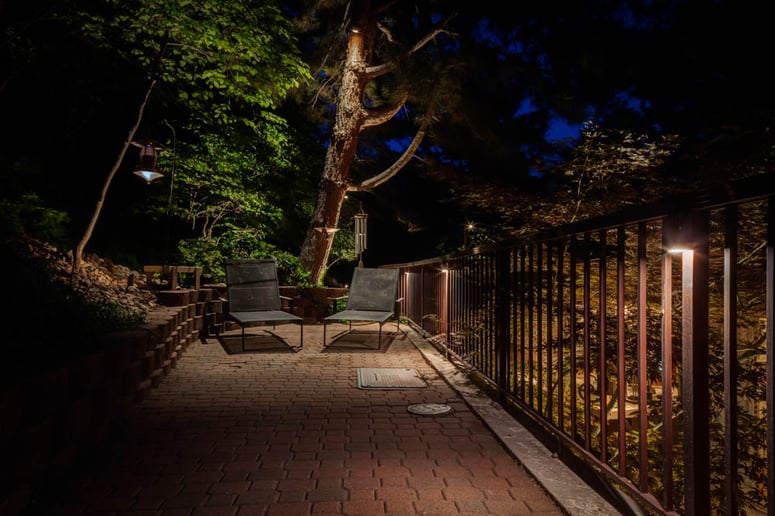
This technique has become especially popular in 2026 as homeowners prioritize low-glare, human-centric lighting that enhances comfort and usability without harsh brightness.
Ideal uses for downlighting include:
- Walkways and patios
- Landscape beds and low plantings
- Outdoor seating and dining areas
- Water features and hardscapes
One of the biggest trends right now is “moonlighting”—installing fixtures high in trees to cast gentle, dappled light through branches. It’s one of the most natural-looking and sought-after effects in modern landscape design.
Pro Tip: Conceal your fixtures whenever possible. The goal is to highlight the space—not the source. When done right, guests won’t notice where the light is coming from, only how good it feels.
Layering Light: The Key to a High-End Outdoor Experience
If you’re wondering whether to choose uplighting or downlighting, the answer is simple: you need both.
In 2026, the most sophisticated outdoor lighting designs rely on layering—combining multiple lighting techniques to create depth, balance, and flexibility.
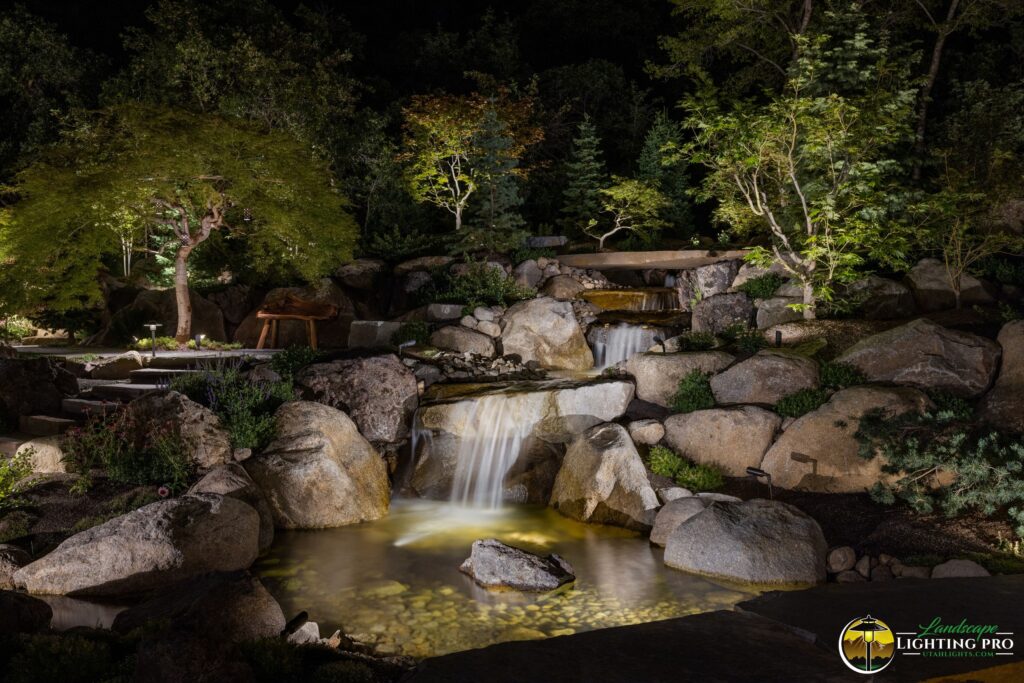
Nature itself doesn’t rely on a single light source. Neither should your landscape.
By blending uplighting and downlighting, you can:
- Highlight vertical features while softly illuminating ground-level spaces
- Create contrast between light and shadow for visual interest
- Improve safety and navigation without over-lighting
- Set different moods for entertaining, relaxing, or everyday use
A well-layered lighting plan might include:
- Uplighting on trees and architectural elements to define structure
- Downlighting over patios and walkways for functionality
- Accent lighting to highlight unique features like water or sculpture
The result? A cohesive, polished look that feels intentional—not overdone.
2026 Trends to Consider
Landscape lighting continues to evolve, and today’s systems offer more than just aesthetics. Here are a few trends shaping outdoor lighting right now:
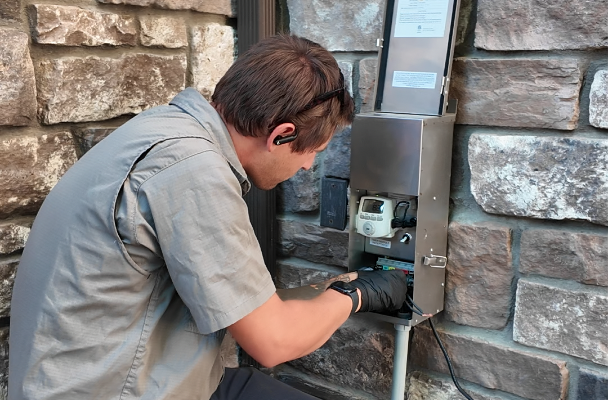
- Smart Lighting Integration: App-controlled systems allow you to adjust brightness, color temperature, and scheduling with ease.
- Warm, Natural Tones: Homeowners are moving away from harsh white light toward warmer, more inviting hues.
- Energy Efficiency: Low-voltage LED systems are now standard, offering long life and minimal energy use.
- Dark Sky Compliance: Reducing light pollution is a growing priority, with designs focused on precision and minimal spill.
- Wellness-Focused Design: Lighting that supports relaxation, circadian rhythm, and outdoor living is more important than ever.
Bringing Your Landscape to Life
Great landscape lighting is both an art and a science. It requires a thoughtful approach, an understanding of design principles, and the right technology to execute it seamlessly.
When uplighting and downlighting work together, your outdoor space doesn’t just look better—it feels better. It becomes a place you want to spend time in, whether you’re hosting friends or enjoying a quiet evening outside.
If you’re ready to transform your property after dark, the right lighting design makes all the difference.
📞 (801) 440-7647